The Vikings in Ireland

https://www.podbean.com/media/share/pb-c45tx-18be813

Today we are talking about the Vikings in Ireland all the way from Dublin to Waterford to Kells to Leinster! 

Thank you for listening to Medieval Murder! If you have any listener questions, comments, or topic suggestions please feel free to reach out via our instagram account @MedievalMurder or via email at info.medievalmurder@gmail.com. Also, check out our merch available on our website medievalmurder.org.


The Last Wife of Henry VIII: Katherine Parr

https://www.podbean.com/media/share/pb-4mauw-18a6a0e

Today we will be talking about the sixth and final wife of King Henry VIII, Katherine Parr.

Thank you for listening to Medieval Murder! If you have any listener questions, comments, or topic suggestions please feel free to reach out via our instagram account @MedievalMurder or via email at info.medievalmurder@gmail.com. Also, check out our merch available on our website medievalmurder.org.

Book Review: The Shardlake Series by C.J. Sansom

The Shardlake Series was written by C.J. Sansom over the course of almost twenty years. The first novel, Dissolution, was published in 2003 and the last book in the series, Tombland, came out in 2019. The series follow the main character, Matthew Shardlake, a lawyer practicing in London during the time of King Henry VIII and Edward VI. Each of the novels follows Shardlake as he pursues a different murder mystery in London and across England. Throughout each adventure, historical and political events impact Shardlake and his assistants from the dissolution of monasteries to the rebel uprising of Robert Kett. Fans of Susanna Gregory and S.D. Sykes will love this Tudor murder mystery series. 

While originally picking up this book in the airport in Edinburgh because I’d had my eyes on it for the last five years and I needed something to read on the plane, I ended up falling in love with this series and have spent the last three months devouring them! This series is exceptionally well written and truly pulls you into the atmosphere of Tudor England. Small warning: the murders get progressively more gruesome throughout the series.

Rating: 4.5/5.0

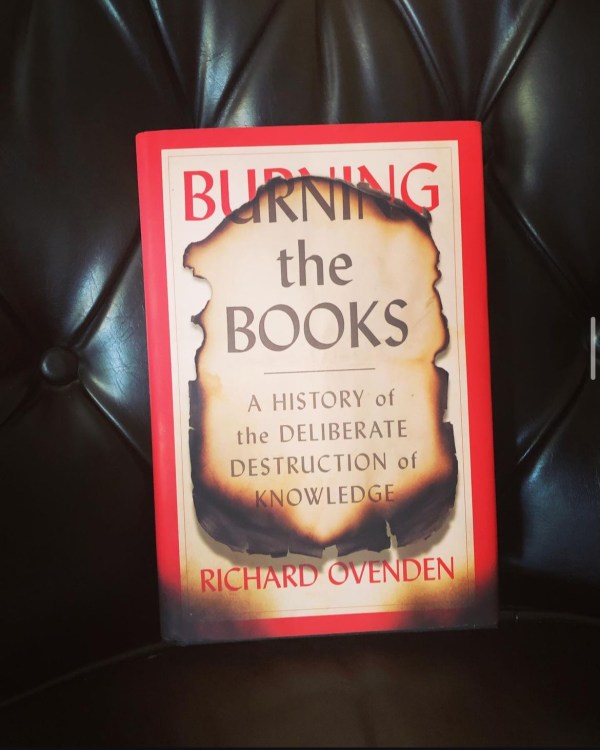
Book Review: Burning the Books by Richard Ovenden (2020)

In Burning the Books: A History of the Deliberate Destruction of Knowledge, Richard Ovenden covers the creation of cuneiform tablets, the loss of the Library of Alexandria, the destruction of knowledge during the English Reformation, book burnings during the Holocaust, cultural site and library destruction during the Bosnian and Iraqi wars and how the digitization of documents could either preserve or destroy knowledge depending on how such information is handled. While there have been other historical works published that cover the intentional destruction of knowledge, Ovenden’s work is the most expansive, accessible, and diverse study to be published in recent years. However, this book builds upon previous scholarship to create such an expansive account of the historical destruction of knowledge. Ovenden states in the Introduction that his purpose in writing this work is due to his own sense of anger at the repeated attacks on the preservation of knowledge that have occurred over the last several centuries. This book is therefore a successful historical account of the destruction of knowledge around the world, touching on several different centuries and geographic areas, that is also accessible for the public. 

Ovenden’s work provides important insight into the political and cultural significance of the destruction of knowledge from books and documents to libraries and cultural heritage sites and how the preservation of knowledge is just as important for the future as it is for the past.

Rating 5.0/5.0
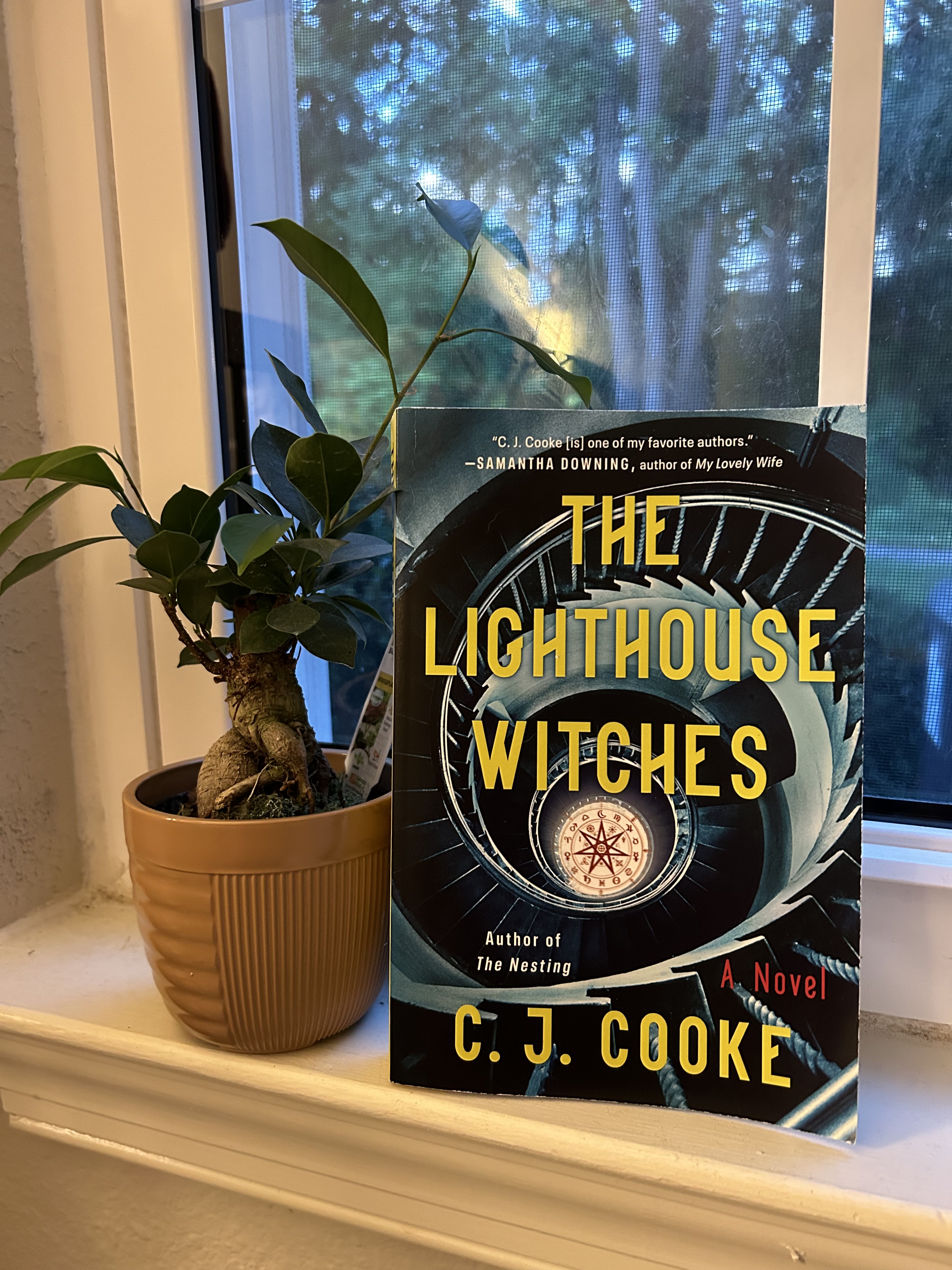
Book Review: The Lighthouse Witches by C. J. Cooke (2021)

If you’re looking for a read that will help you end your summer while ushering in the fall, definitely pick up The Lighthouse Witches by C. J. Cooke. The Lighthouse Witches follows a family of four – a single mother, Liv, with her three young daughters – as they move to a remote Scottish cliffside because Liv has been commissioned to paint a mural on the inside of a lighthouse. This novel combines elements of history, fantasy, folklore, and horror into a delightfully witchy, fall feeling read. All summer I’ve been craving a read that can pull me in and whisk me away to somewhere dark and stormy and this was the perfect match. This book definitely had elements I wasn’t expecting but C.J. Cooke fully delivers when it comes to world building and suspense. I highly recommend The Lighthouse Witches to anyone who is a fan of dark, witchy thrillers.

Rating 5.0/5.0

Book Review: The Burning Girls by C.J. Tudor

If you’re looking for a witchy, thriller, perfect for an October night, definitely pick up The Burning Girls by C.J. Tudor. Tudor creates the perfect atmospheric, psychological thriller set in a small English village. While I don’t usually enjoy books with dual perspectives, the mother-daughter dual perspective in this novel works perfectly. The story line follows Reverend Jack Brooks and her daughter Flo, who move to the small village, Chapel Croft, after the mysterious death of the village’s previous Reverend. As the pair get acclimated to their new home, they discover the village’s pained past that includes missing girls, ghostly apparitions, and a history of witchcraft. Beautifully written and poignant, C.J. Tudor’s The Burning Girls is a must read, especially since it will soon be turned into a television series!

Rating: 5.0/5.0

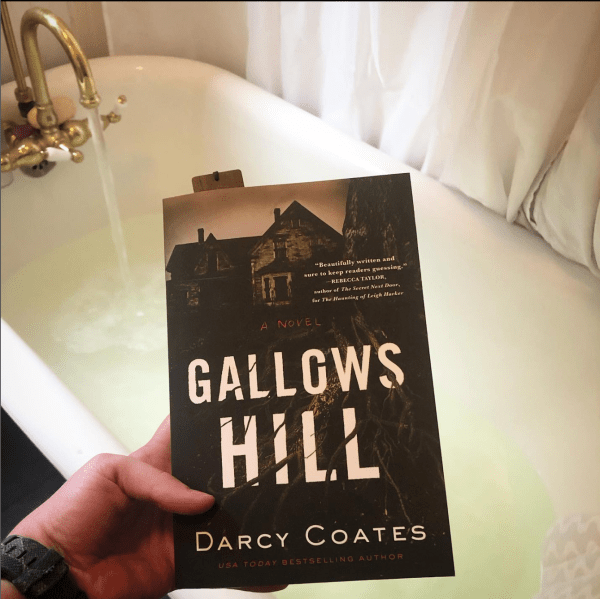
Book Review: Gallows Hill by Darcy Coates

If you’re looking for the perfect spooky read for the fall season, look no further than Gallows Hill by Darcy Coates. The story follows the heroine, Margot, who was abandoned by her parents at a young age and is now back at her childhood home for her parents funeral. Margot is left the house in their will, along with Gallows Hill Winery. As Margot is introduced to her new inheritance, she hears rumors that the land is cursed and was the cause of her parents death. This book takes you on a journey of grief, acceptance, and sacrifice from start to finish.

While I normally don’t read horror, this book kept me in it’s grip the entire time and made me not want to turn out the lights! I highly recommend this suspenseful thriller by Darcy Coates, especially for those who are fans of Phoebe Wynne and Tana French.

Rating: 4.5/5.0

Book Review: Wild and Wicked Things by Francesca May

Wild and Wicked Things by Francesca May takes you back to the years after WWI in a novel that is reminiscent of F. Scott Fitzgerald’s The Great Gatsby but with magic intertwined. Wild and Wicked Things is filled with the glittering parties of the roaring twenties and the danger of not only new love but also what happens when friends grow apart. The story follows Annie as she moves to Crow Island where magic is prohibited and she knows no one but a long lost friend. Annie is drawn further and further into the world of magic by her magnetic neighbor, Emmeline and she begins to push the boundaries of everything she knows about the world and herself. This gothic novel makes you fall in love with the characters and the world that Francesca May has created. 

May leaves a trail of wreckage behind in her wake and left me with a book hangover I couldn’t quite cure. This was simply a book I could not put down. This novel features everything I never knew I needed: diverse characters (LGBTQ+ included), magic, and murder. I loved this book, even if it did have some flaws, but what book doesn’t? I highly recommend for fans of The Once and Future Witches. 

Rating: 4.0/5.0

The Execution of Ælfheah of Canterbury

Ælfheah was born in 954 in either Gloucestershire or Somerset, England. It is thought that Ælfheah was born into Anglo-Saxon nobility. Early in his life Ælfheah entered the Benedictine Monastery of Deerhurst in Gloucestershire as a monk, but shortly thereafter he transferred to Bath Abbey where he became an anchorite. As an anchorite, Ælfheah would have entered into a strict religious life in which he would take last rites and then be enclosed into a solitary room. This room would often be attached to the parish church with a small window allowing for a servant or another monk to bring food and water to him. During his time as an anchorite, Ælfheah would have devoted his time to prayer and meditation. 

It is unknown how long Ælfheah led his life as an anchorite before he was actually promoted within Bath Abbey to an Episcopate. He was then elected as Abbot of Bath Abbey sometime in the late 970s or early 980s and appointed by the Archbishop of Canterbury, Dunstan. During his time as abbot, Ælfheah enacted stricter rules for the monks within the abbey; making sure that they followed the Rule of Saint Benedict which was written 400 years prior. These rules included a structure for the Benedictine way of life in a monastery with special attention paid to obedience, the role of the abbot, silence, humility, and even sleep, among others. 

During this early period of Ælfheah’s appointment as Abbot of Bath Abbey, a new king came to power in England, Æthelred the Unready. Æthelred became king in 978 at only 10 years old after the death of his father, Edward the Martyr. During his reign, Æthelred the Unready dealt with several threats to the English kingdom including a war with the Danes which would last several decades and an increase in viking invasions throughout the 980s and 990s. 

In 984, Ælfheah was appointed as the Bishop of Winchester by Archbishop Dunstan, who had now become one of the young king’s key advisors and counselors. During his time as the Bishop of Winchester, Ælfheah oversaw the construction of a large organ within the cathedral which supposedly could be heard up to a mile away and was so large that it took over twenty men to play it. Unfortunately, the organ does not survive today. Ælfheah also expanded the churches within his district and promoted the cult of Saint Swithin, who had been the Bishop of Winchester over a century before. 

During the 980s and 990s, new viking invasions began in England. However, in 991 the young King Æthelred agreed to pay a sum to the viking invaders in order for the invasions to stop. This was only successful for a short amount of time as invasions resumed again just three years later. One of Ælfheah’s most notable, and later relevant, accomplishments during his bishopric was the negotiation of a peace treaty with the vikings after a majorly damaging viking invasion in 994 in which they attempted to burn the city of London to the ground, luckily unsuccessfully. The viking King of Norway at this time was Olaf Tryggvason who actually participated in the raid of 994. It is thought that after this raid, as one of the most notable religious figures in England at the time, Ælfheah provided guidance to King Æthelred in regard to a peace treaty with the vikings, more specifically with Olaf Tryggvason. 

After the peace treaty, it is thought that Olaf Tryggvason, King of Norway, actually converted to, or at least confirmed, his belief in Christianity with the aid of Ælfheah’s influence. When he returned to Norway, he began to impose Christianity on the areas under his control in Norway, largely communities along the coast. It is also thought that Olaf took Christianity via missionaries to the Shetland, Faroe, and Orkney islands, as well as to Iceland and Greenland. While Olaf did seem to stick to his word in terms of not raiding England after the peace treaty, other vikings did continue to invade. 

In 1006, Ælfheah was promoted to be Archbishop of Canterbury. The following year he journeyed to Rome in order to meet with the pope, at the time Pope John XVIII. During Ælfheah’s journey, he was actually robbed by a gang of highwaymen but luckily escaped with his life. 

While Ælfheah did several notable things during his tenure as Archbishop of Canterbury, this blog is dedicated to Medieval Murder and so we will skip these things and move on to his death just four years later in 1011. In around 1011, the viking raiders largely made up of Danish and Swedish vikings invaded England led by Thorkell the Tall. However, this time they focused their attack on Canterbury after having successfully sacked many English cities up the coast. The raiders were described as “an immense raiding army” by the Anglo-Saxon Chronicle and was made up of men who were coming from a career of violence and robbery. The invasion lasted almost a month as they laid siege to Canterbury from around the 3rd to the 29th of September 1011. 

Unfortunately, after a stong defense by the citizens of Canterbury, the city was sacked by the vikings. According to the Anglo-Saxon Chronicle “In this year, between the Nativity of St. Mary and Michaelmas, they beset Canterbury, and entered therein through treachery; for Elfmar delivered the city to them, whose life Archbishop Elfeah formerly saved.” Once the vikings entered the city they “seized Archbishop Elfeah, and Elfward the king’s steward, and Abbess Leofruna, and Bishop Godwin; and Abbot Elfmar they suffered to go away. And they took therein all the men, and husbands, and wives; and it was impossible for any man to say how many they were; and in the city they continued afterwards as long as they would. And, when they had surveyed all the city, they then returned to their ships, and led the archbishop with them.” Once they had captured everyone who they deemed of importance and plundered everything of value, the vikings burned Canterbury Cathedral. 

Ælfheah was kept hostage by the vikings for seven months during which time he refused to allow a ransom be paid for his release. As the Anglo-Saxon Chronicle states 

“Then on the Saturday was the army much stirred against the bishop; because he would not promise them any fee, and forbade that any man should give anything for him. They were also much drunken; for there was wine brought them from the south. Then took they the bishop, and led him to their hustings, on the eve of the Sunday after Easter, which was the thirteenth before the calends of May; and there they then shamefully killed him. They overwhelmed him with bones and horns of oxen; and one of them smote him with an axe-iron on the head; so that he sunk downwards with the blow; and his holy blood fell on the earth, whilst his sacred soul was sent to the realm of God.” 

“The corpse in the morning was carried to London; and the bishops, Ednoth and Elfhun, and the citizens, received him with all honour, and buried him in St. Paul’s minster; where God now showeth this holy martyr’s miracles. When the tribute was paid, and the peace-oaths were sworn, then dispersed the army as widely as it was before collected. Then submitted to the king five and forty of the ships of the enemy; and promised him, that they would defend this land, and he should feed and clothe them.” 

Ælfheah was the first Archbishop of Canterbury to be murdered. The leader of the viking raiders that killed Ælfheah, Thorkell the Tall, supposedly attempted to stop the angry mob from killing Ælfheah. He was so disgusted and appalled that they would kill the Archbishop that he then joined forces with King Æthelred. 

Ælfheah of Canterbury was venerated as a saint fifty years later and is now known as Saint Ælfheah of Canterbury, one of the martyred saints.

Bibliography

The Anglo-Saxon Chronicle

“About Anchorites.” Hermits and Anchorites of England. University of Exeter. 2010. http://hermits.ex.ac.uk/index/anchorites 

Cavendish, Richard. “Archbishop Aelfheah of Canterbury Murdered by Vikings.” History Today 62, no. 4 (2012): 9.

The Rule of Saint Benedict. Translated by Leonard Joseph Doyle. United States: Liturgical Press, 2001.

“Olaf Tryggvason.” Britannica. https://www.britannica.com/biography/Olaf-Tryggvason Williams, Ann. Æthelred the Unready: the ill-counselled king. United Kingdom: Bloomsbury Academic, 2003.

Book Review: THE WITCH OF WILLOW HALL by Hester Fox

The Witch of Willow Hall is a wonderful debut by Hester Fox from 2018. The Witch of Willow Hall follows the Montrose family who has been discarded from Boston due to scandal and have moved to a newly built country house. The family attempt to find normalcy in their newfound setting, but Lydia, the middle sister of three, finds herself surrounded by bumps in the night, a swirling romance, and the death of loved one. Lydia is forced to follow her heart, embrace her power, and deal with the depressing nature of death. The Witch of Willow Hall is an atmospheric tale perfect for fans of Louisa Morgan and Nicola Cornick.

I picked up this novel for the gothic vibes and for the inclusion of witchcraft, but I stayed for the story, the relationship building, and the elements of a traditional gothic ghost story. I did not expect the romantic elements of the story but enjoyed them nonetheless. While this novel does not have as heavy a focus on witchcraft as I was expecting (it is titled The Witch of Willow Hall afterall), Lydia’s encounters with the supernatural more than make up for it. I recommend this book if you’re looking for a book that’s hard to put down.

Rating: 4.0/5.0

Blog at WordPress.com.

Up ↑